David Mosquera Lois
Department of Mathematics · University of Santiago de Compostela
Research
Much of my research lies in the triangle spanned by algebraic topology, combinatorial topology, and dynamics. I am particularly interested in how these perspectives interact, from quantitative homotopy invariants and finite models to Morse theory and fixed-point phenomena.
Throughout this page I highlight a selection of my work. For a complete list of publications, see my zbMATH profile.
Algebraic & Combinatorial Topology
I am interested in quantitative homotopy invariants measuring the complexity of spaces and the homotopical difference between maps. Homotopic distance provides a common framework for classical invariants such as Lusternik–Schnirelmann category and topological complexity. This viewpoint was introduced in Homotopic distance between maps (Mathematical Proceedings of the Cambridge Philosophical Society, 2022), with my PhD advisor Enrique Macías-Virgós.
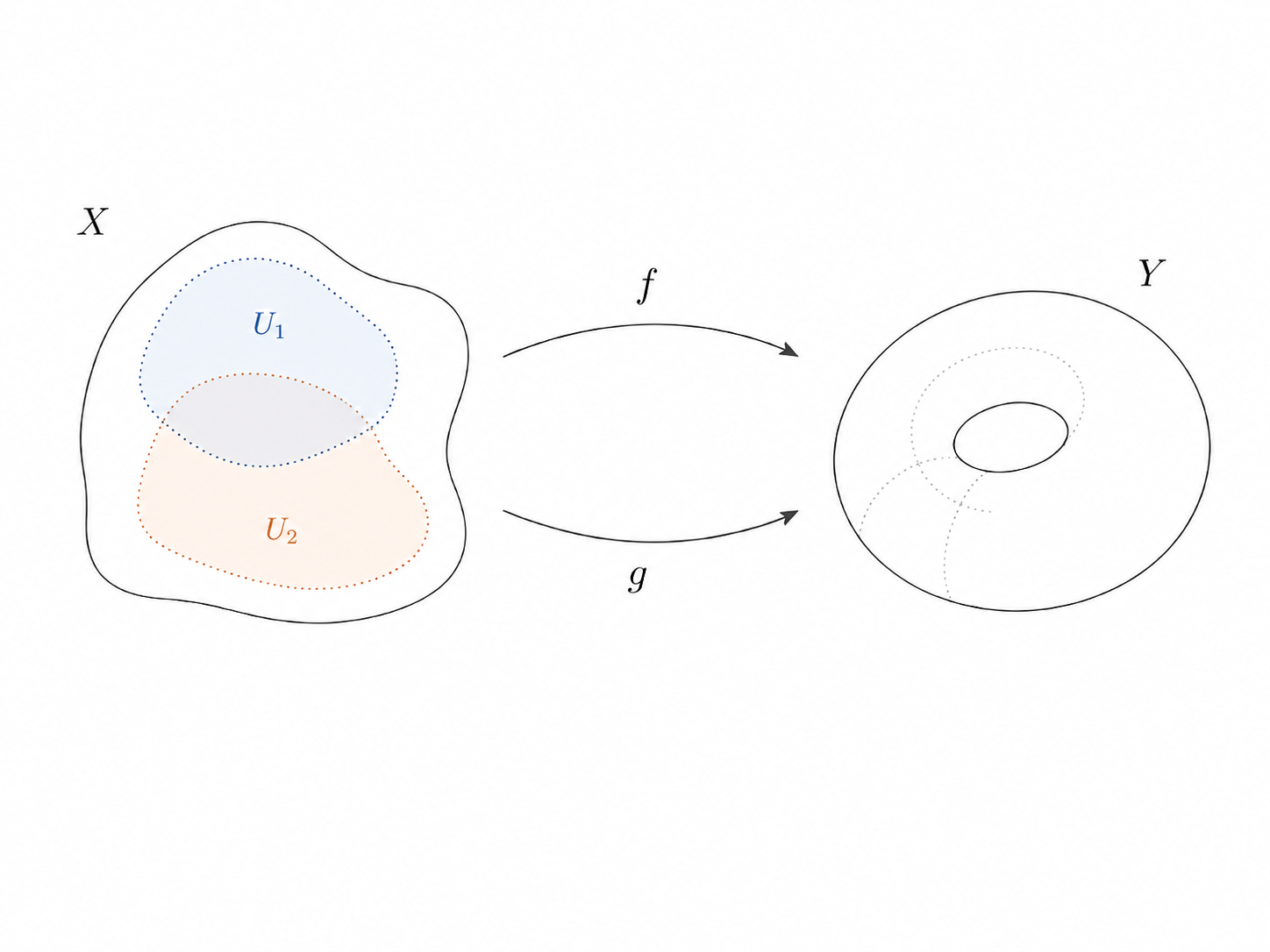
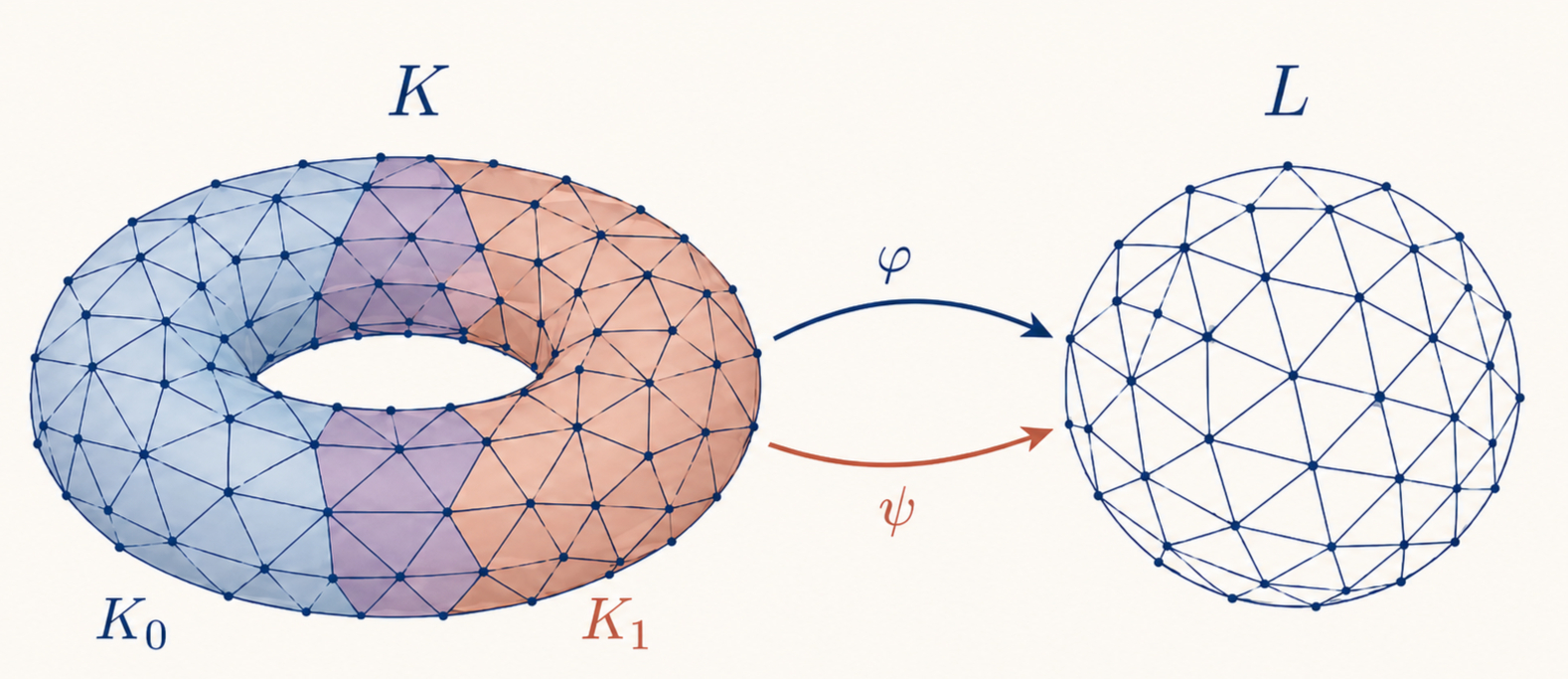
I am particularly interested in approaching these invariants through algebraic and combinatorial methods. In the preprint A Computational (Co)homological Approach to Contiguity Distance (2025), with my PhD student Ángel Méndez-Vázquez and Enrique Macías-Virgós, we develop computable cohomological methods for contiguity-type distances.
This also leads me to finite spaces and categorical models of topology. In the preprint Weak and Strong Fibrations of Functors (2026), with my former PhD student Isaac Carcacía-Campos and Enrique Macías-Virgós, we extend fibration, sectional-category and motion-planning ideas to small categories.
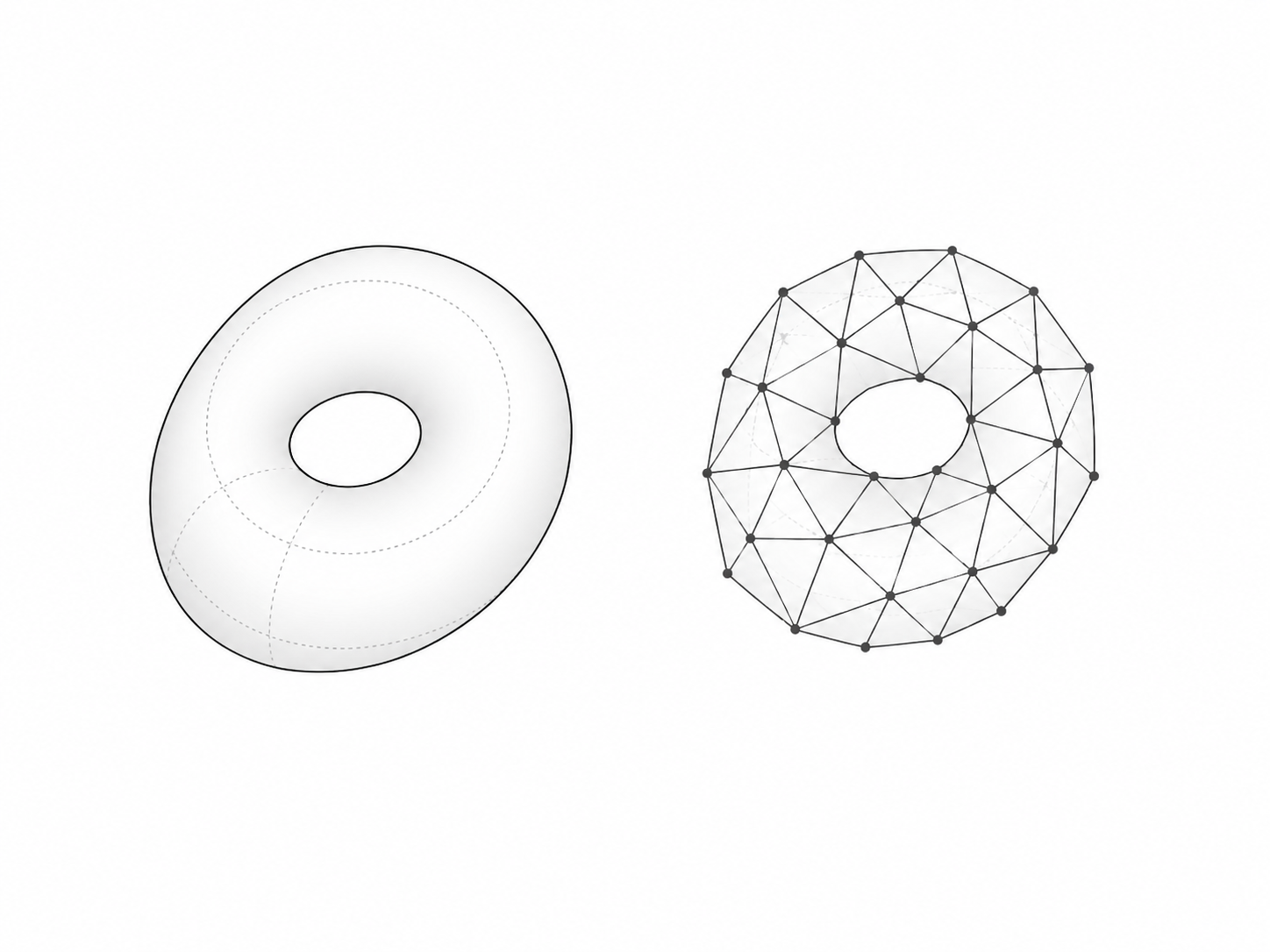
I am also interested in finite models in their own right. In the preprint On Whitehead's theorem for minimal finite models (2026), I give a negative answer to an open question of Barmak concerning the validity of Whitehead's theorem for minimal finite models.
Topology & Dynamics
A second strand of my research explores how topological methods can encode dynamical information, particularly through Morse theory and Lefschetz fixed-point theory.
In Homotopic Distance and Generalized Motion Planning (Mediterranean Journal of Mathematics, 2022), with Enrique Macías-Virgós and María José Pereira-Sáez, we use Morse–Bott theory to relate homotopic distance to generalized motion-planning problems.
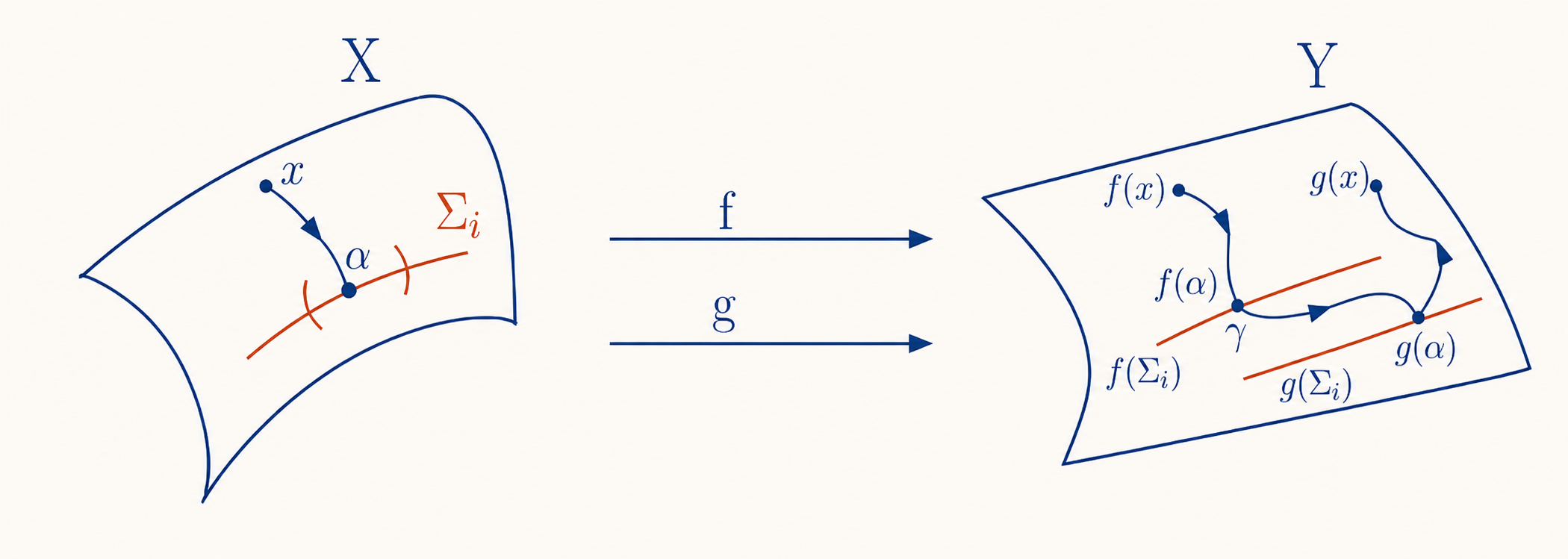
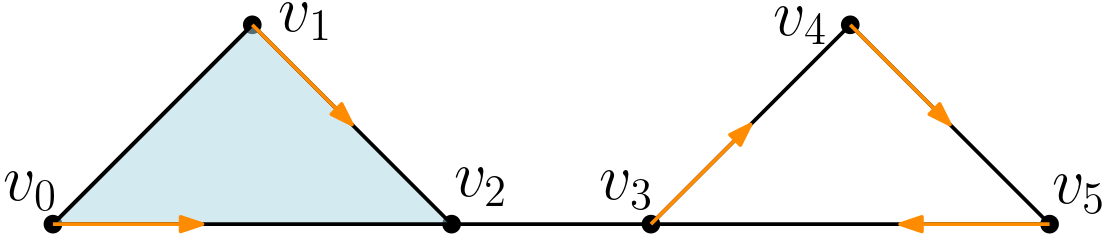
I am especially interested in bringing Morse theory and Lefschetz theory closer together. In Morse–Bott Inequalities for Endomorphisms (RACSAM, 2026), with my former PhD student Alejandro O. Majadas-Moure and my PhD advisors Enrique Macías-Virgós and José Antonio Vilches, we develop inequalities that bring together the classical Morse inequalities and Lefschetz fixed-point theory, yielding information that neither framework provides on its own.
With my former PhD student Alejandro O. Majadas-Moure, in Integration with respect to the Lefschetz number (Journal of Fixed Point Theory and Applications, 2025), we develop an integration theory based on the Lefschetz number, with applications including sensor-based object detection.
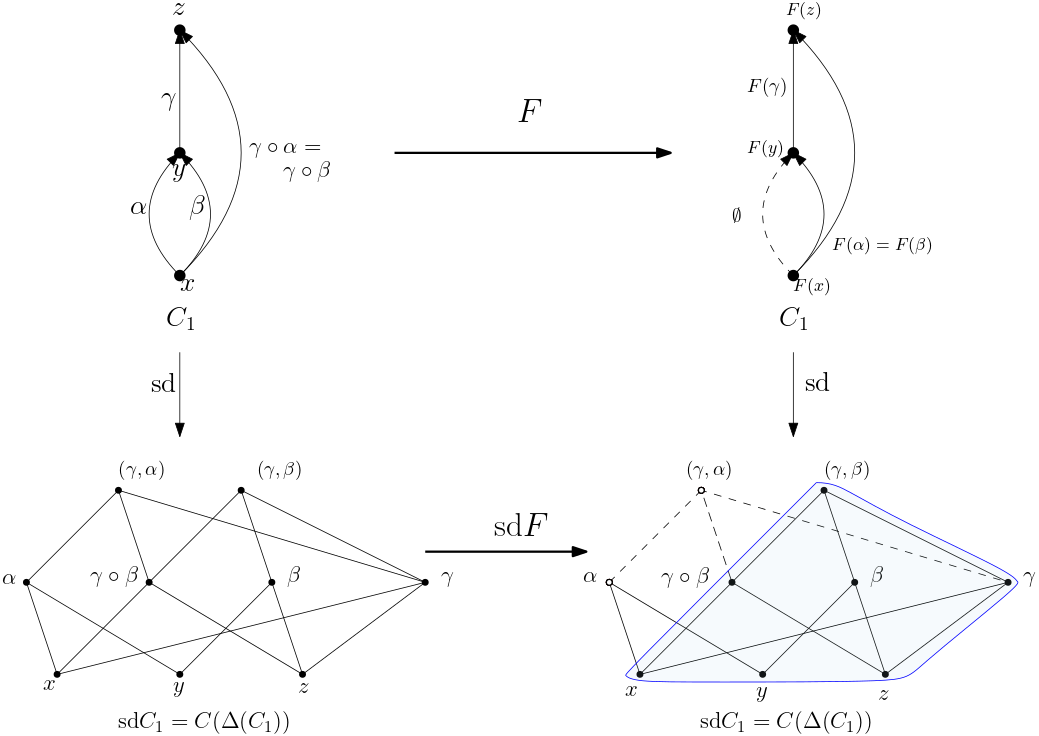
Finally, I am interested in how fixed-point theory behaves in finite and combinatorial settings. In Lefschetz fixed-object and fixed-morphism theorems for acyclic categories (Fixed Point Theory, 2026), with Samuel Castelo-Mourelle and Enrique Macías-Virgós, we construct Lefschetz-type invariants detecting fixed objects and fixed morphisms of endofunctors of finite acyclic categories.
Teaching & Outreach
Teaching
During the 2026–2027 academic year, I teach General Topology, Algebraic Topology, and Algebraic Topology and Applications at the Universidade de Santiago de Compostela.
I also supervise undergraduate and graduate research projects, as well as PhD theses, mainly in topics related to topology and its applications.
Outreach
I am involved in several initiatives aimed at bringing mathematics to students and to a broader audience.
Mathematical Olympiad
I have collaborated with the Galician stage of the Spanish Mathematical Olympiad since 2018 and have been part of the Galician delegation since 2024.
ESTALMAT
I participate in the Galician ESTALMAT programme, aimed at fostering mathematical talent among young students.
Mathematical outreach
I take part in outreach activities for the general public and collaborate as a jury member in research initiation awards, including the Stephen Hawking Prize.